http://www.boston.com/politicalintelligence/2012/06/28/supreme-court-grants-victory-president-obama-upholding-constitutionality-healthcare-law/4o5Rwiyv7QhlVPlaSBcmEP/story.htmlSupreme Court grants victory to President Obama, upholding constitutionality of 2010 health care law
WASHINGTON – The US Supreme Court Thursday handed President Obama a major victory by upholding the sweeping 2010 healthcare law, declaring that Obama and Congress acted within their powers in requiring most Americans to obtain health insurance.
The ruling reaffirms the most ambitious and controversial undertaking of Obama’s first term: attempting to guarantee that most of the 45 million Americans without insurance will get better access to medical care. Demonstrators supporting the healthcare law exploded in cheers outside the Supreme Court as news of the ruling emerged.
The justices ruled 5-to-4 that Congress acted within its authority to impose an ``individual mandate’’ by using its taxing powers to fashion the enforcement side of the requirement. Under the law, individuals who fail to obtain insurance will be required to pay a tax penalty. The requirement begins in 2014.
Chief Justice John Roberts Jr., an appointee of former President George W. Bush who often has sided with the conservatives on the court in close cases, sided with the more liberal wing this time and proved to be the decisive vote. There is some irony in the turn of events. As a US senator in 2005, Obama voted against Roberts’s confirmation. Now Roberts has handed Obama one of the biggest victories of his political life.
By maintaining the status quo, the Supreme Court has given Republicans in Congress a fresh rallying point, as they have vowed to continue their fight to legislatively repeal the sweeping law. But with the conservative-leaning court affirming the government’s power to intervene aggressively in the national healthcare market, the GOP faces a difficult path.
Obama and his Democratic allies have said they will continue seeking to persuade voters of the virtues of the law during the election season, including popular provisions that bar insurance companies from denying coverage for pre-existing conditions and that require insurers to cover children in family plans until they are 26 years old. The law also includes a massive expansion of the federal Medicaid program, which is expected to add 17 million new people to government-sponsored coverage by 2016, also remains intact.
The victory for Obama and Democrats bucked conventional wisdom and proved the futility of attempting to predict how the Supreme Court will act when fundamental and unprecedented questions about the power of federal government are on the line. Most analysts had anticipated a high-court setback based on the tone of questions during oral arguments and a recent conservative tilt of the court.
Stephen Ryan, head of the government strategies group in the Washington-based law firm of McDermott Will & Emery, said Chief Justice Roberts saved the court from being seen as a politicized body, with a potential trifecta of partisan decisions given decisions in the past 12 years on Bush v. Gore, determining who won the 2000 presidential race, and Citizens United on unlimited political spending by corporations.
“This is the move of a great pol,” Ryan said. “He in effect has taken his branch of government out of being seen as having dumped something ugly in the punch bowl.”
The president fulfilled a longstanding goal of the Democratic Party in 2010 when he pushed through the most sweeping expansion of health care coverage since the federal government established the Medicare insurance program for the elderly in the 1960s. The law included a vast expansion of the federal Medicaid program to include millions of new beneficiaries and set up an array of cost-savings and reforms in federal healthcare programs. Modeled on the landmark healthcare plan passed by former Governor Mitt Romney in Massachusetts, the federal law also calls upon states to establish healthcare exchanges where low-cost and subsidized plans would be offered.
But the political costs were extremely high to both the president and Democrats in Congress. The vastly expanded role of the government in the healthcare market spawned a conservative backlash that spawned the Tea Party movement and helped Republicans win back the House from Democratic control in the 2010 mid-term elections.
Democrats lost 63 House seats and 6 Senate seats that year.
“The long rows of Democratic political dead can rest in peace today that they didn’t die in vain,” Ryan said. Had the ruling struck down all or parts of the law, “the president would have had a real problem dealing with Democratic members watching their colleagues lay down their seats for nothing.”
The negative reaction in 2010 also helped Massachusetts Republican Scott Brown seize the seat left vacant by the death of Senator Edward M. Kennedy, who spent most of his career advocating for better health care coverage and was a crucial backer of the Obama effort until his death in August 2009.
Obama is expected to make a statement about court decision at 12:15 this afternoon.
“The president has one last opportunity to sell this law to the American public today, which he has never done,” Ryan said. “His presidency might ride on his ability to convince people that his policy actually makes sense but they just didn’t know enough about it. That’s his opportunity for this afternoon.”
Polls have shown Americans never fully understood or supported the benefits or costs of the complex law; a narrow majority continues to favor its total repeal. Even Obama has not campaigned aggressively on its passage in his 2012 re-election bid.
The most contentious aspect of the 2010 law is the ``individual mandate.’’ Requiring that most Americans obtain insurance is a critical tradeoff in barring insurance companies from denying benefits for pre-existing conditions and imposing other limits on coverage.
Without forcing healthy people to buy insurance and pay into the pot, not enough premiums will flow into an insurance plan to cover everyone who gets sick. In anticipation of the Supreme Court ruling, insurance companies in recent weeks have been scrambling to explain why they need this provision if they are going to be required to cover all comers, regardless of their medical history or condition.
Without the mandate, individual insurance premiums would rise to the point of becoming prohibitively expensive, and tens of millions more people would remain uninsured – the very problem the law was meant to address, analysts said.
Nationally, the sweeping health reform law is supposed to expand coverage to 30 million people who are currently uninsured by 2016, through a combination of employer-sponsored insurance, Medicaid expansion, private individual plans, and insurance exchanges. It is unclear how many would ultimately be covered without the mandate to buy insurance or pay a penalty starting in 2014.
Thursday, June 28, 2012
I actually cried when I heard. Guess I didn't have that much faith in the Supremes, lol!


Monday, June 25, 2012

Friday, June 22, 2012

Tuesday, June 19, 2012

Sunday, June 17, 2012

Saturday, June 16, 2012

Wednesday, June 13, 2012

Sunday, June 10, 2012
Wednesday, June 6, 2012
Laughter is the best medicine. . . .
This morning, feelin' sad and sorry about Wisconsin, checked in over at Kos, and found at least one of the cheer-up threads. This image is from there. Left thinking how strong is the need of humans not to wallow. And cheered at that trait. Anyways, for your edification:

Monday, June 4, 2012
Excerpt: 'American Grown' by First Lady Michelle Obama
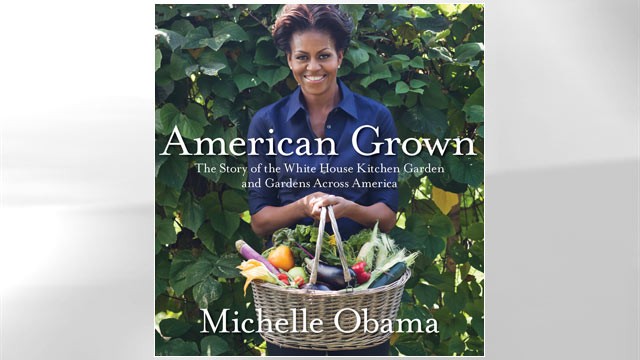
In her new book, "American Grown: The Story of the White House Kitchen Garden and Gardens Across America," Obama tells the story of the garden initiative she began in 2009 that included planting a fruit and vegetable garden on the White House lawn, the first such garden planted at the White House since Eleanor Roosevelt's Victory Garden.
Obama appeared today on "Good Morning America" alongside students from PS 102 and PS 107 in Brooklyn. Those students have successfully grown their own container gardens to show how easy it is for people to do the same.
Read an excerpt from "American Grown" below, and click here for an "American Grown" recipe using blueberries from the White House garden. Click here to find a recipe for summer chopped salad, also from the book.
Introduction
On March 20, 2009, I was like any other hopeful gardener with a pot out on the windowsill or a small plot by the back door. I was nervously watching the sky. Would it freeze? Would it snow? Would it rain? I had spent two months settling into a new house in a new city. My girls had started a new school; my husband, a new job. My mother had just moved in upstairs. And now I was embarking on something I had never attempted before: starting a garden.But this was not going to be just any garden— it would be a very public garden. Cameras would be trained on its beds, and questions would be asked about what we had planted and why we had planted it. The garden was also being planted on a historic landscape: the South Lawn of the White House. Here even the tomatoes and beans would have a view of the towering Washington Monument.
When I first arrived in Washington, I wasn't even sure that we could plant a garden. I didn't know whether we would be allowed to change the landscaping on the White House grounds, or whether the soil would be fertile enough, or whether there would be enough sunlight. And I had hardly any gardening experience, so I didn't even really know how to go about planting a garden in the first place. But one thing I did know was that I wanted this garden to be more than just a plot of land growing vegetables on the White House lawn. I wanted it to be the starting point for something bigger. As both a mother and a first lady, I was alarmed by reports of skyrocketing childhood obesity rates and the dire consequences for our children's health. And I hoped this garden would help begin a conversation about this issue—a conversation about the food we eat, the lives we lead, and how all of that affects our children.
I also knew that I wanted this new White House garden to be a "learning garden," a place where people could have a hands-on experience of working the soil and children who have never seen a plant sprout could put down seeds and seedlings that would take root. And I wanted them to come back for the harvest, to be able to see and taste the fruits (and vegetables) of their labors.
Friday, June 1, 2012

Subscribe to:
Posts (Atom)